

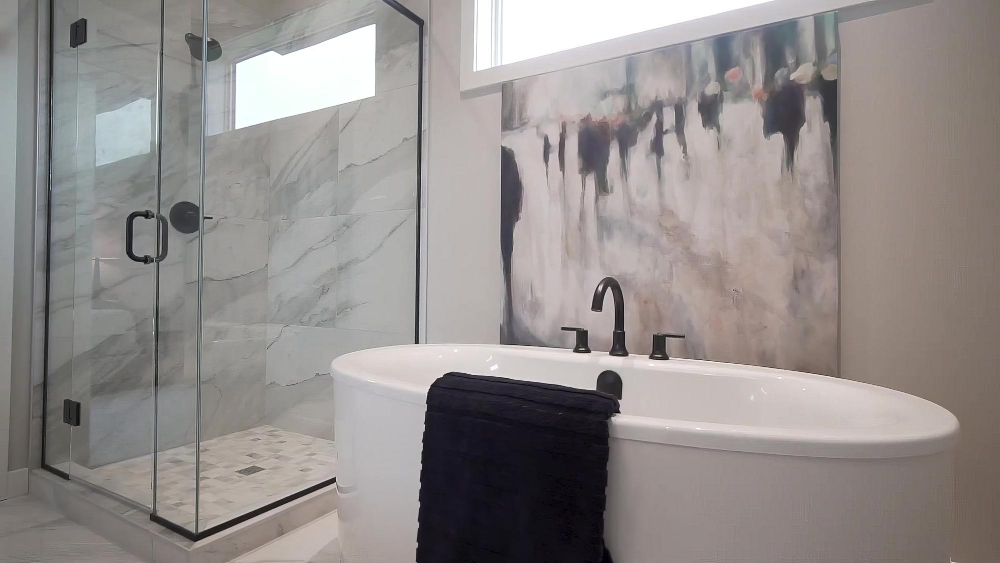
Few bathroom remodeling decisions seem as straightforward—and become as complicated—as choosing between a walk-in shower and a bathtub. Both can create an attractive, functional bathroom, but they serve very different routines.
A walk-in shower can simplify daily bathing, create a more open visual impression, and potentially support accessibility when carefully designed. A bathtub provides soaking, can be useful for bathing young children, and preserves a function some households consider essential.
The wrong question is simply, “Which one is better?”
The more useful question is: “Which one better supports the people who will actually use this bathroom over the next several years?”
Before deciding, consider five factors: household routines, available space, accessibility, maintenance, and whether another bathtub exists elsewhere in the home.
| Decision Factor | Walk-In Shower | Bathtub |
|---|---|---|
| Quick daily bathing | Excellent | Good with shower combination |
| Long soaking | Not designed for it | Excellent |
| Bathing young children | Less convenient | Often more practical |
| Low-entry potential | Excellent when properly designed | Usually requires stepping over tub wall |
| Open visual appearance | Often stronger | Depends on configuration |
| Water containment | Depends heavily on design | Tub walls naturally help contain water |
| Soaking experience | None | Primary advantage |
If virtually everyone in the household showers and nobody regularly uses the bathtub, a well-designed walk-in shower may provide greater everyday value. If you have young children, enjoy soaking, or need the bathroom to serve multiple bathing preferences, keeping a bathtub can be the more versatile choice.
Option A: Walk-In Shower
A walk-in shower prioritizes standing bathing and can be designed with a low threshold or, where construction conditions permit, a curbless entry. This can make the bathroom feel more open and reduce the need to step over a traditional bathtub wall.
One of its biggest advantages is design flexibility. Depending on the available space, a shower can include a handheld showerhead, wall-mounted controls, a bench, niches, grab bars, and multiple shower fixtures.
But the phrase walk-in shower covers many configurations. A large curbless shower with carefully planned drainage behaves differently from a compact shower with a curb and swinging glass door.
Water management should therefore drive the design.
Shower dimensions, drain location, floor slope, waterproofing, glass configuration, showerhead direction, and door position all influence whether water remains where it belongs.
Pros of a Walk-In Shower
- Convenient for daily showering: especially useful for households that rarely take baths.
- Potentially easier entry: low-threshold and curbless designs can reduce barriers.
- Flexible layout: benches, niches, handheld fixtures, and grab bars can be incorporated.
- Open appearance: clear glass and continuous surfaces may make the bathroom feel visually larger.
- Can use space efficiently: particularly when replacing an existing tub within a similar footprint.
Cons of a Walk-In Shower
- No soaking: removing the bathtub eliminates that function from the room.
- Glass requires maintenance: large enclosures can show water spots and mineral deposits.
- Water containment requires careful planning: particularly with open or curbless configurations.
- Accessibility is not automatic: a large shower can still be poorly designed for mobility needs.
- Conversion may require significant work: drainage, waterproofing, plumbing, and floor conditions can affect complexity.
Walk-In Shower wins for households where quick, frequent showers are the dominant bathing routine and soaking is rarely important.
If future accessibility matters, don’t stop at removing the tub. Consider the entire route into and through the bathroom. Entry width, floor transitions, shower controls, seating, handheld fixtures, slip resistance, and appropriate support locations can all matter.
Option B: Bathtub
The bathtub remains one of the most versatile bathroom fixtures because it can serve several different users. It provides soaking for adults, bathing for young children, and—when paired with a shower—allows one footprint to provide both functions.
There are several major configurations to consider.
An alcove tub is installed between walls and is often combined with a shower. A freestanding tub creates a stronger visual statement and emphasizes soaking. Other configurations can address particular room layouts and design objectives.
The important distinction is that not every bathtub is equally practical for every user.
A deep soaking tub may feel luxurious but can require a significant step to enter and exit. A freestanding tub may create cleaning space around its exterior that needs to be considered. A tub-shower combination can maximize function in a compact bathroom but still requires users to step over the tub wall to shower.
Pros of a Bathtub
- Supports soaking: the clear winner for homeowners who genuinely enjoy baths.
- Useful for young children: often simplifies bathing compared with a shower-only space.
- Can provide two functions: a tub-shower combination supports both bathing and showering.
- Broad selection: alcove, freestanding, soaking, and other configurations accommodate different goals.
- Preserves household flexibility: particularly when it is the only bathtub in the home.
Cons of a Bathtub
- Higher entry barrier: stepping over a tub wall can become difficult for some users.
- Can consume substantial space: especially larger freestanding or soaking models.
- May be underused: some households retain tubs they almost never use.
- Freestanding models require cleaning around them: clearance and accessibility should be considered.
- Deep tubs aren’t ideal for everyone: entry and exit should be evaluated before purchase.
Bathtub wins when one bathroom needs to accommodate soaking, young children, or both bathing and showering within a single fixture area.
Side-by-Side Comparison: Which Option Fits Your Priorities?
The strongest decision usually appears when you compare the two options against a specific household rather than against each other in the abstract.
| Priority | Walk-In Shower | Bathtub | Advantage |
|---|---|---|---|
| Frequent showers | Excellent | Good with shower | Walk-In Shower |
| Soaking | Not available | Excellent | Bathtub |
| Bathing young children | Possible but less convenient | Very practical | Bathtub |
| Low-entry design | Strong potential | Usually weaker | Walk-In Shower |
| Multiple bathing preferences | Shower only | Strong with tub-shower combination | Bathtub |
| Open visual effect | Often excellent | Varies | Walk-In Shower |
| Large glass maintenance | Potentially higher | Can be lower depending on enclosure | Depends on design |
Now consider space.
Homeowners sometimes assume replacing a bathtub with a shower automatically creates a dramatically larger bathroom. It doesn’t necessarily increase the room’s actual floor area. What it can do is change how that area feels and functions.
Clear glass, fewer visual barriers, and a lower threshold can make the room appear more open. Conversely, retaining the existing tub footprint for a tub-shower combination can deliver considerable functionality without reorganizing the entire bathroom.
| Household Scenario | Often the More Practical Starting Point | Why |
|---|---|---|
| Couple who never takes baths | Walk-In Shower | Matches actual daily routine |
| Family with toddlers | Bathtub | Simplifies child bathing |
| Older homeowner planning long-term use | Walk-In Shower | Can support lower-barrier entry when carefully designed |
| Home with one bathroom only | Tub-Shower Combination | Preserves maximum bathing flexibility |
| Home already containing another bathtub | Walk-In Shower becomes easier to justify | Bathing function remains elsewhere |
| Homeowner who regularly soaks | Bathtub | Supports an established habit |
Maintenance also deserves an honest comparison.
A tiled walk-in shower may involve grout, glass, fixtures, niches, and multiple surfaces requiring cleaning. A bathtub may reduce the amount of tiled floor inside the bathing area but introduces its own rim, interior surface, enclosure, and surrounding joints.
Neither option is automatically low-maintenance.
Material selection, water quality, grout choice, glass quantity, ventilation, detailing, and cleaning habits may influence maintenance more than the basic choice between tub and shower.
Choosing the Better Fit for Your Home
If you still aren’t sure, don’t begin by looking at bathroom inspiration photos. Begin by documenting your household’s behavior for a week.
Who uses the bathroom? Does anyone actually take baths? How often? Are children using the room? Does anyone have difficulty stepping over the existing tub? Is this the only bathtub in the house? How long do you expect to remain in the home?
Then evaluate the physical room.
- Measure the available bathing area accurately.
- Identify window locations and door swings.
- Determine where existing plumbing and drainage are located.
- Consider ventilation.
- Review how towels and toiletries will be stored.
- Evaluate comfortable access around the toilet and vanity.
- Consider whether future mobility needs should influence the design.
Choose it when daily showering, lower-barrier entry, an open visual design, and customizable shower features matter more than soaking.
Choose it when soaking, bathing young children, or preserving multiple bathing options matters more than creating a shower-focused bathroom.
For a smaller home or a single full bathroom, this can be the most versatile compromise because it provides both functions without requiring two separate bathing areas.
One final consideration is resale. Homeowners sometimes make this decision entirely around what an unknown future buyer might want. Buyer preferences vary by household and market, so resale shouldn’t automatically override your own needs.
However, removing the only bathtub in a home does reduce bathing options. If resale flexibility matters, discuss the decision with a knowledgeable local real estate professional who understands buyer expectations in your particular market rather than relying on a universal rule.
There is no overall winner between a walk-in shower and a bathtub. There is only a better match for a specific bathroom and household.
If you shower every day and haven’t used the bathtub in years, preserving it purely from habit may not make sense. If you’re raising young children or regularly enjoy soaking, replacing a useful tub with a fashionable shower may create an inconvenience you’ll notice immediately.
Design for the routines that genuinely happen in your home. Then consider future needs, maintenance, available space, and the rest of the property’s bathrooms.
That approach may be less dramatic than choosing whichever option currently dominates design magazines, but it produces something considerably more useful: a bathroom designed for the people who actually live there.
